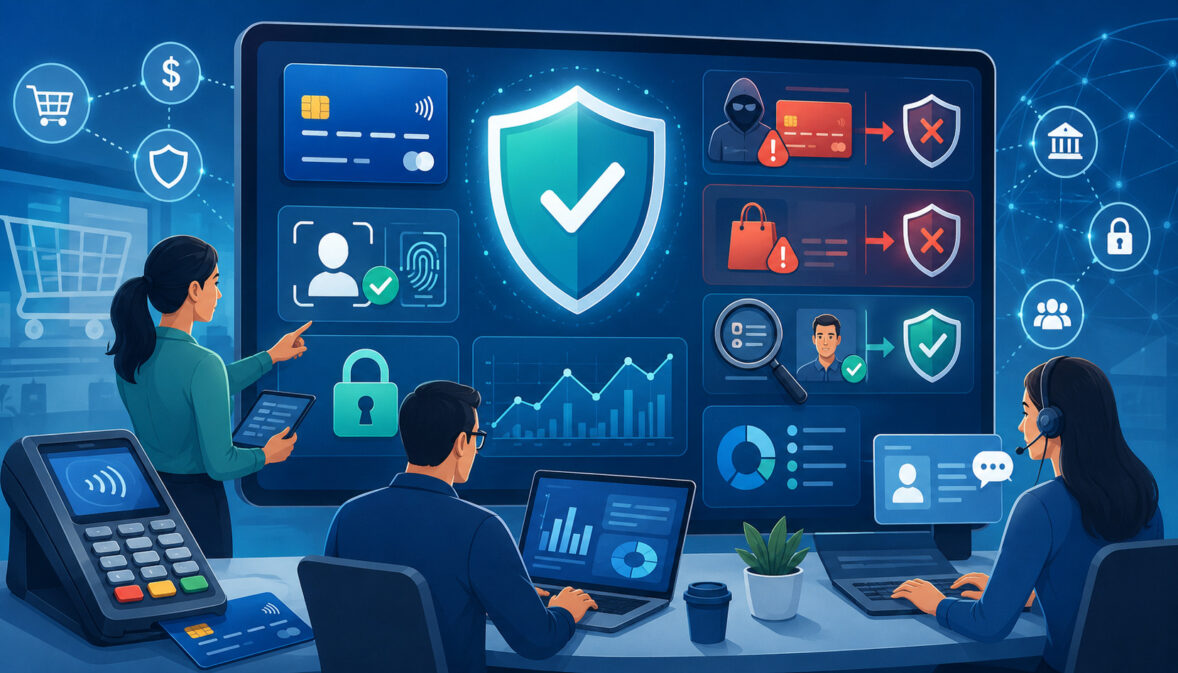
Chargeback prevention matters for any business that accepts credit cards, debit cards, online payments, invoices, recurring payments, and mobile payments. A chargeback can remove revenue after a sale, add fees, consume staff time, and create risk signals that may affect payment processing stability.
Strong chargeback prevention does not rely on one tool or one policy. It combines fraud prevention, customer dispute management, clear billing communication, accurate records, and consistent payment processing risk management.
The goal is not to block every possible dispute. The goal is to reduce preventable disputes, respond well when they occur, and build a payment experience that customers understand from checkout through delivery, service completion, renewal, or refund.
What Is Chargeback Prevention?
Chargeback prevention is the set of steps a business uses to reduce payment disputes before they become formal chargebacks. It includes preventing fraud claims, billing confusion, refund problems, duplicate charges, unauthorized transaction claims, and service-related disputes.
When a customer does not recognize a charge, believes a transaction was unauthorized, feels they did not receive what was promised, or cannot get a timely response from the business, they may contact their card issuer instead of contacting the merchant. Once that happens, the business may face a chargeback, even if the original sale was legitimate.
Effective chargeback prevention helps customers understand what they bought, what they paid, when they paid, how the charge will appear, and how to reach support. It also helps merchants verify transactions, document fulfillment, and manage risk throughout the payment lifecycle.
For example, an online store can reduce disputes by sending order confirmations, delivery updates, and digital receipts. A service business can reduce disputes by using signed agreements, clear cancellation terms, and service completion records.
A subscription business can reduce disputes by sending renewal reminders and making cancellation instructions easy to find.
Chargeback prevention strategies for businesses should match the way payments are accepted. Card-present transactions need secure terminals, staff training, and accurate receipts.
Online transactions need secure checkout, fraud filters, AVS, CVV checks, and order monitoring. Recurring payments need authorization records, renewal notices, and careful customer communication.
Businesses should also review their payment setup regularly. A reliable payment processing solution should support secure payments, clear reporting, and operational workflows that help reduce avoidable disputes.
Why Chargebacks Happen
Chargebacks happen for many reasons, and not all of them involve criminal fraud. Some disputes begin because a customer does not recognize the billing descriptor on a statement. Others happen because an order arrived late, a refund took longer than expected, a subscription renewed unexpectedly, or a customer could not get help quickly enough.
Reducing chargebacks in payment processing starts with understanding the root cause. If a business only reacts after a dispute arrives, it may miss recurring problems in checkout, fulfillment, communication, or refund handling. Chargeback management best practices begin with tracking why disputes happen and looking for patterns across payment channels.
For example, a spike in “unauthorized transaction” claims may suggest weak verification, suspicious order patterns, or account takeover attempts.
A rise in “product not received” disputes may point to shipping delays, missing tracking numbers, or poor delivery communication. A pattern of “credit not processed” disputes may indicate refund policy confusion or slow internal approval workflows.
Businesses should review chargeback reason codes, customer messages, support tickets, refund history, order records, and fulfillment notes together. Looking at only one source can create an incomplete picture.
The table below summarizes common chargeback causes and practical prevention steps.
| Chargeback Cause | Why It Happens | Prevention Strategy |
| Unauthorized transaction claim | Stolen card use, account takeover, weak verification, or suspicious purchase behavior | Use AVS, CVV checks, fraud filters, velocity controls, and manual review for high-risk orders |
| Customer does not recognize billing descriptor | Statement name differs from the business name, brand name, or website customers remember | Use a clear billing descriptor and include support contact details on receipts |
| Duplicate charge | System error, staff mistake, repeated invoice payment, or failed checkout retry | Monitor duplicate transactions, train staff, and reconcile payments daily |
| Product or service not received | Shipping delays, missing tracking, poor fulfillment communication, or service scheduling issues | Send confirmations, tracking updates, delivery proof, and service completion notices |
| Refund not processed | Customer expects a refund sooner than the business policy allows, or the refund workflow is unclear | Publish clear refund terms, confirm refund requests, and communicate processing timelines |
| Subscription confusion | Customer forgets renewal terms, trial ending date, or cancellation process | Send renewal reminders, make cancellation easy, and store recurring billing authorization |
| Product or service dissatisfaction | Customer believes the item or service did not match the description or agreement | Use accurate descriptions, contracts, photos, acceptance records, and support follow-up |
| Friendly fraud or misuse | Customer received the product or service but disputes the payment anyway | Keep documentation, delivery proof, customer communication, and transaction verification records |
The best prevention strategy is usually a combination of customer clarity and risk control. Payment dispute prevention improves when businesses reduce uncertainty, verify transactions, and make it easier for customers to contact the merchant before they contact their card issuer.
Fraud and Unauthorized Transactions
Fraud and unauthorized transactions are among the most serious chargeback drivers because they can involve stolen cards, account takeover, synthetic identity activity, or coordinated attempts to exploit weak verification. These claims often occur in card-not-present environments, where the business does not physically inspect the card or meet the cardholder.
Warning signs may include mismatched billing and shipping information, unusually large orders, repeated failed payment attempts, multiple orders from the same device using different cards, rushed shipping requests, or purchases from locations that do not match the customer profile. None of these signs proves fraud by itself, but together they may justify additional review.
Credit card chargeback prevention should include AVS checks, CVV verification, fraud scoring, transaction velocity rules, device monitoring, and order review thresholds. Businesses should also control employee access to payment tools and prevent staff from bypassing risk checks without approval.
Fraud prevention works best when it balances security with customer experience. Overly aggressive filters can reject legitimate customers, while weak controls can expose the business to avoidable losses. A practical approach is to apply stronger review to higher-risk transactions while allowing low-risk transactions to move smoothly.
Customer Confusion and Billing Issues
Many chargebacks begin with confusion rather than fraud. A customer may see a charge on their statement and not recognize the billing descriptor. They may forget an invoice payment, miss an emailed receipt, mistake a pending authorization for a duplicate charge, or misunderstand how a subscription or deposit works.
Billing descriptors are especially important. If the descriptor does not match the business name, website name, brand name, or location customers recognize, customers may assume the charge is unauthorized. Adding a phone number or recognizable descriptor can encourage customers to contact the business first.
Receipts also matter. Digital receipts should include the business name, purchase date, amount, payment method, order number, refund terms, and support contact information. For invoices, the receipt should clearly show what was paid and whether any balance remains.
Duplicate charges can also create disputes. Sometimes a customer retries checkout after a connection issue and creates more than one payment. In other cases, staff may enter a payment manually after a terminal transaction has already succeeded. Daily reconciliation helps catch these errors before the customer notices them.
Customer dispute management improves when businesses respond quickly and with context. A short, helpful explanation can often resolve confusion before it becomes a formal chargeback.
Refund and Service Disputes
Refund and service disputes often happen when customer expectations do not match business policies. A customer may expect an immediate refund, while the business may require inspection, approval, processing time, or a return window. If this is not communicated clearly, the customer may file a payment dispute instead of waiting.
Refund policy best practices start before the sale. Policies should explain eligibility, timelines, return conditions, cancellation terms, restocking fees, shipping responsibilities, and exceptions. These details should be visible at checkout, on invoices, in contracts, and in confirmation emails when relevant.
Service businesses need strong documentation because the product is often intangible. Signed agreements, appointment records, work approvals, project milestones, photos, completion notes, and customer acknowledgments can help resolve disputes. If the customer later claims the service was not provided, these records become important.
Shipping issues can also trigger disputes. Delayed packages, missing tracking, wrong addresses, and unclear delivery expectations can lead to “product not received” claims. Businesses should share tracking information, confirm delivery addresses, and communicate delays quickly.
Payment dispute prevention is easier when customers can get help before frustration escalates. A visible support channel, timely response, and reasonable resolution process can reduce chargebacks even when the customer is unhappy.
Chargeback Prevention Strategies for Businesses

Chargeback prevention strategies for businesses should begin with the customer journey. Every point where a customer could become confused, frustrated, or suspicious should be reviewed. This includes product pages, invoices, checkout screens, receipts, shipping messages, subscription terms, refund policies, and support channels.
Clear policies are one of the strongest prevention tools. A refund policy should be visible before payment, not hidden after checkout. A cancellation policy should explain deadlines and steps.
A subscription policy should identify billing frequency, renewal timing, and how customers can cancel. Service terms should define what is included, what is excluded, and when the work is considered complete.
Accurate billing descriptors are also essential. Customers should be able to connect the statement charge to the purchase they made. If the legal entity name differs from the brand customers know, the business should work with its payment provider to make the descriptor more recognizable where possible.
Digital receipts and order confirmations help create a clear record. These messages should include the business name, order number, amount, date, purchased item or service, payment method, refund terms, and contact information. For higher-value transactions, businesses may also include delivery expectations, support instructions, or signed terms.
Customer support is a major part of merchant chargeback protection. When customers cannot reach a business, they are more likely to contact their issuer. Businesses should make contact information easy to find and train staff to handle billing questions, refund requests, and service complaints calmly and consistently.
Delivery tracking and fulfillment records are especially important for online orders. Tracking numbers, delivery confirmation, signed proof, shipment photos, and address verification can help prevent and respond to “product not received” claims.
Transaction verification adds another layer of protection. Depending on the payment channel, businesses may use AVS, CVV checks, secure checkout, identity verification, signed invoices, purchase approvals, or customer confirmations.
Useful prevention steps include:
- Display refund, cancellation, and shipping policies before payment.
- Send receipts and order confirmations automatically.
- Use a clear billing descriptor.
- Keep transaction, shipping, and customer communication records.
- Train staff to resolve disputes before escalation.
- Review chargeback reports and adjust workflows.
- Monitor suspicious transactions and unusual order patterns.
Businesses that want better operational control should also understand how payment costs and dispute activity appear on statements. Reviewing a merchant statement can help identify fees, chargeback activity, refunds, and transaction patterns that deserve closer attention.
Reducing Chargebacks in Payment Processing
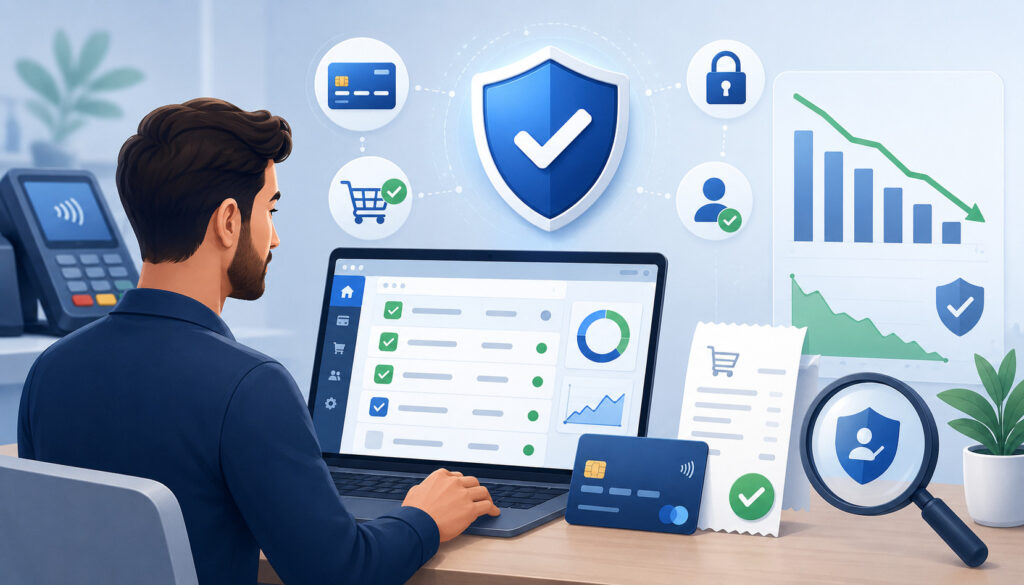
Reducing chargebacks in payment processing requires both technology and process discipline. Fraud filters, AVS, CVV checks, secure checkout, payment authentication, transaction monitoring, and staff training all play a role.
However, these tools must be configured carefully so they reduce real risk without blocking too many legitimate customers.
AVS helps compare the billing address provided by the customer with the address on file with the card issuer. CVV checks help confirm that the customer has access to the card security code. These tools are especially useful for online and keyed transactions, where the card is not physically present.
Fraud filters can flag transactions based on risk indicators such as order amount, velocity, location mismatch, device behavior, email risk, or repeated failed attempts. Businesses should set thresholds based on their own transaction patterns. A small local service business may need different rules than a high-volume online retailer.
Secure checkout is also important. Payment pages should use secure connections, trusted payment gateways, and properly configured payment forms. Businesses should avoid collecting card data through insecure forms, email, text messages, or unapproved manual processes.
Payment authentication can add protection for certain online transactions. When available and appropriate, authentication tools help verify that the cardholder is participating in the transaction. This can reduce unauthorized transaction claims and improve the quality of transaction records.
Transaction monitoring should not be limited to fraud. Businesses should also monitor duplicate payments, refund delays, unusually high dispute rates, subscription cancellation complaints, and recurring customer support issues. These patterns can reveal operational problems before they become larger payment risks.
Staff training is often overlooked. Employees should know how to process refunds correctly, avoid duplicate payments, explain pending authorizations, verify customer identity when needed, and document customer approvals. A single poorly handled payment interaction can lead to a dispute.
Payment processing risk management also includes choosing systems that support secure, reliable operations. Businesses comparing tools can review available products and services that support secure card acceptance, reporting, mobile payments, and point-of-sale workflows.
Chargeback Management Best Practices

Chargeback management best practices begin before the first dispute arrives. Businesses should have a documented process for receiving dispute notifications, assigning responsibility, collecting evidence, deciding whether to accept or respond, and submitting documentation before deadlines.
Speed matters. Chargeback notices often have response windows, and late responses can result in automatic losses. Businesses should make sure dispute alerts go to the right person or team. If notices are ignored, delayed, or sent to an outdated email address, even valid sales may be difficult to defend.
Documentation is the foundation of chargeback management. The right evidence depends on the dispute type, but common records include receipts, signed agreements, invoices, order confirmations, delivery tracking, proof of service, customer messages, refund policy acceptance, cancellation records, and transaction verification data.
Businesses should organize records in a way that makes them easy to retrieve. A folder of scattered screenshots is less useful than a consistent process that connects order numbers, customer profiles, payment IDs, delivery records, and communication history.
Tracking dispute reasons is just as important as responding. If the same reason code appears repeatedly, the business should investigate the source.
For example, frequent “credit not processed” disputes may point to refund delays. Frequent “transaction not recognized” disputes may point to descriptor confusion. Frequent “product not received” disputes may point to shipping communication issues.
A good workflow should also define when not to fight a chargeback. If the business made an error, failed to deliver, or cannot provide documentation, accepting the dispute and fixing the process may be the better decision. Fighting every dispute without evidence can waste time and may not improve outcomes.
Businesses should review dispute outcomes regularly. Winning or losing a chargeback is not the only measure. The deeper question is whether the business learned why the dispute happened and what can be improved.
Payment Security and Fraud Prevention
Payment security and fraud prevention are central to credit card chargeback prevention. A secure payment environment helps reduce unauthorized transactions, data exposure, internal misuse, refund abuse, and preventable processing errors.
Encryption protects card information during transmission. Tokenization replaces sensitive card data with a non-sensitive token that can be used for future transactions without storing the original card number in business systems. These tools reduce risk when businesses accept online payments, recurring payments, mobile payments, and card-present transactions.
PCI-aware workflows are also important. Businesses should avoid writing down card numbers, storing card data in spreadsheets, sending payment details through email, or keeping card information in unsecured files. Staff should understand which systems are approved for payment acceptance and which practices create unnecessary risk.
Secure card handling applies to in-person payments too. Employees should use approved terminals, avoid manual entry unless necessary, and confirm that the payment amount is correct before completing the transaction. Terminals should be physically protected and checked for tampering.
User permissions help prevent internal errors and misuse. Not every employee needs access to refunds, stored payment methods, transaction voids, or reporting tools. Role-based access can limit exposure and create accountability. Businesses should remove access when employees change roles or leave.
Refund controls are another part of payment processing risk management. Refunds should follow documented approval rules, especially for large amounts, repeated refund requests, or refund methods that differ from the original payment. This helps prevent both mistakes and abuse.
Fraud alerts can help businesses act earlier. Alerts may flag suspicious transactions, unusual order patterns, repeated payment failures, or customer behavior that needs review. However, alerts only help if someone is responsible for reviewing them and taking action.
A trusted source for learning about fraud risks and reporting scams is the FTC fraud reporting resource, which provides information for recognizing and reporting fraud-related activity.
Common Chargeback Prevention Mistakes to Avoid
Many chargeback problems come from preventable mistakes. These mistakes often seem small at first, but they can create confusion, weaken evidence, and increase dispute risk over time.
One common mistake is having an unclear refund policy. If customers cannot understand when refunds are available, how to request them, and how long they may take, they may assume the business is avoiding them. Refund policy best practices require clarity, visibility, and consistency.
Weak customer service is another major risk. When customers cannot reach a business, they may go directly to their card issuer. Slow responses, unclear answers, and unresolved billing questions can turn simple issues into formal disputes.
Missing receipts also create problems. If a customer cannot find proof of purchase, they may not recognize the charge later. Automatic digital receipts, invoice confirmations, and accessible customer records reduce this risk.
Manual card storage is a serious mistake. Businesses should not store card numbers in notebooks, spreadsheets, email threads, photos, or customer files. This creates security risk and can undermine customer trust. Approved payment tools should handle stored credentials and recurring billing.
Poor shipping documentation can weaken a business’s response to delivery disputes. Tracking numbers, delivery confirmation, signed proof, shipment notices, and address records should be retained. For high-value items, businesses may need stronger delivery controls.
Ignoring dispute reports is also costly. Chargeback reports are not just accounting records. They reveal customer friction, fraud patterns, fulfillment problems, billing confusion, and policy gaps. Businesses should review them regularly and adjust operations.
Another mistake is focusing only on fraud prevention while ignoring customer experience. Fraud tools matter, but many disputes are caused by confusion, dissatisfaction, or communication gaps. A balanced approach protects both revenue and customer trust.
Businesses reviewing cost and risk together may also benefit from learning how card processing fees interact with payment operations, refunds, transaction types, and account management.
What is chargeback prevention?
Chargeback prevention is the process of reducing payment disputes before they become formal chargebacks. It includes fraud prevention, clear billing communication, accurate receipts, customer support, refund policy clarity, secure payment handling, and strong documentation.
The goal is to help customers recognize charges, resolve issues with the business first, and reduce avoidable revenue loss.
Why do customers file chargebacks?
Customers file chargebacks for many reasons, including unauthorized transaction claims, billing confusion, duplicate charges, delayed refunds, missing deliveries, subscription confusion, product dissatisfaction, or lack of merchant response.
Some disputes are legitimate, while others may result from misunderstanding or misuse. Businesses should review dispute reasons to identify patterns and fix root causes.
How can a business reduce unauthorized transaction chargebacks?
A business can reduce unauthorized transaction chargebacks by using AVS, CVV checks, fraud filters, transaction monitoring, secure checkout, payment authentication, and manual review for suspicious orders.
Staff should also be trained to recognize unusual behavior, verify customer information when needed, and avoid bypassing security steps without approval.
What records should businesses keep for chargeback management?
Useful records include receipts, invoices, order confirmations, signed agreements, refund policies, customer messages, delivery tracking, proof of service, cancellation records, and payment verification data.
Records should be easy to retrieve by order number, customer name, transaction ID, or invoice number. Good documentation supports both prevention and dispute response.
Can clear refund policies help prevent chargebacks?
Yes. Clear refund policies help customers understand eligibility, timelines, return conditions, cancellation rules, and exceptions before they pay.
When customers know what to expect, they are less likely to assume the business is refusing help. Refund confirmations and timely updates also reduce uncertainty after a refund request is submitted.
How do billing descriptors affect chargebacks?
Billing descriptors affect whether customers recognize a charge on their card statement. If the descriptor looks unfamiliar, customers may believe the transaction was unauthorized.
A recognizable descriptor, paired with digital receipts and support contact information, can reduce confusion and encourage customers to contact the business before disputing the charge.
What is the role of customer service in payment dispute prevention?
Customer service plays a major role because many disputes begin when customers feel ignored or confused. Fast, helpful responses can resolve billing questions, refund concerns, delivery problems, and service complaints before they escalate. Businesses should make support contact information visible and train staff to document important customer interactions.
Is fraud prevention enough to stop chargebacks?
Fraud prevention is important, but it is not enough by itself. Chargebacks can also come from billing confusion, refund delays, duplicate charges, shipping issues, subscription misunderstandings, or dissatisfaction.
A complete chargeback prevention plan combines fraud tools, clear policies, secure payment handling, customer support, and ongoing dispute analysis.
Conclusion
Chargeback prevention helps businesses reduce disputes, protect revenue, improve customer trust, and maintain healthier payment processing. It works best when businesses combine secure payment tools with clear policies, accurate billing, reliable receipts, responsive support, delivery documentation, and consistent dispute review.
No business can eliminate every chargeback, but many disputes can be prevented with better communication and stronger workflows. Customers should understand what they bought, what they paid, how the charge will appear, when they can expect delivery or service, and how to get help.
A practical approach to merchant chargeback protection includes fraud prevention, customer dispute management, refund policy best practices, transaction verification, and payment processing risk management. When these pieces work together, businesses are better prepared to prevent avoidable disputes and respond effectively when chargebacks occur.
The strongest chargeback prevention programs are built over time. Review dispute data, listen to customer complaints, improve weak points, and keep payment processes secure. Each improvement makes the business more resilient, more trustworthy, and better prepared to manage payment risk.