Getting the lowest credit card processing fees is less about chasing a magical “one-size-fits-all” rate and more about understanding what you’re really paying for—then controlling the parts you can control.
Most businesses focus on the quoted rate, but the biggest savings usually come from improving transaction quality, choosing the right pricing model, negotiating the right markup, and fixing hidden cost drivers like downgrades, data misses, and unnecessary network fees.
The good news: you can lower costs without harming customer experience. In many cases, you can reduce effective rates by tightening your checkout flow, optimizing how you accept cards (tap, chip, online), matching your processor to your business type, and using compliant cost-recovery strategies where allowed.
This guide walks you through the practical, proven steps to get the lowest credit card processing fees, with plain-language explanations, examples, and future-facing insights on where fees are heading next.
Understand What You’re Actually Paying For
To consistently get the lowest credit card processing fees, you need to separate your costs into three buckets:
1) Interchange (set by card brands / issuing banks)
Interchange is the base cost that typically makes up the largest portion of credit card processing fees. It varies by card type (rewards, business, corporate), how the card is accepted (tap/chip vs keyed), and your business category.
Card networks publish extensive interchange programs and updates; for example, Mastercard’s 2025–2026 interchange program documentation shows how rates vary across categories and card tiers, effective April 11, 2025.
2) Network assessments and brand fees (set by the networks)
These include assessment fees and various network charges. You don’t negotiate these, but your processing behavior can affect how often certain fees apply (especially online, credential-on-file, and cross-border scenarios).
3) Processor markup (the negotiable part)
This is where you can usually win. Markup includes the processor’s margin, gateway fees, monthly fees, statement fees, PCI program fees, and sometimes extra “junk” fees. Two providers can have identical interchange costs but wildly different markups and fee stacks—which means the same business can pay very different totals.
If your goal is the lowest credit card processing fees, your mission is simple: reduce avoidable interchange penalties, reduce network fee triggers, and negotiate markup like a pro.
Start With a Cost Baseline Using the Right Metrics
If you want the lowest credit card processing fees, don’t start by shopping quotes. Start by measuring your current “effective rate” correctly.
The most useful baseline metrics are:
- Effective rate (blended):
Total processing costs ÷ total card sales.
This tells you what you’re truly paying overall.
- Cost per transaction:
Total processing costs ÷ number of transactions.
This matters if you have many small tickets.
- Interchange vs. markup split:
Ask your provider for a breakdown showing interchange, assessments, and markup. If they cannot clearly separate these, that’s a red flag.
Also track what type of payments you take: in-person tap/chip, keyed entry, invoices, ecommerce, recurring billing, and card-not-present. Card-not-present transactions often cost more because they carry more fraud risk and frequently trigger additional fee categories.
When you measure the right way, you’ll see exactly where the fastest path to the lowest credit card processing fees is hiding—pricing model, checkout method, card mix, or processor markup.
Choose the Right Pricing Model for Your Business

Pricing model choice is one of the biggest levers for the lowest credit card processing fees.
Interchange-Plus Pricing
Interchange-plus is typically the most transparent model. You pay the true interchange and assessments, plus a fixed markup (for example, “interchange + 0.25% + $0.10”).
Why it helps you get the lowest credit card processing fees:
- You can see what’s negotiable (markup) vs. non-negotiable (interchange).
- It’s harder for processors to hide margin in the rate.
- It scales better as volume grows.
Flat-Rate Pricing
Flat-rate can be convenient (especially for new businesses), but it’s often more expensive once you have consistent volume or higher average tickets.
When it makes sense:
- Very small volume
- Unpredictable sales
- You prioritize simplicity over the lowest credit card processing fees
Tiered Pricing
Tiered pricing bundles transactions into “qualified / mid-qualified / non-qualified” buckets. This is usually the least transparent and often the most costly.
Why it usually blocks the lowest credit card processing fees:
- Downgrades can explode your costs
- It’s hard to audit
- Two statements can look similar while costing very different amounts
If ranking and profitability matter, interchange-plus is usually the strongest foundation for the lowest credit card processing fees.
Reduce Downgrades by Improving Transaction “Quality”
A major reason businesses fail to get the lowest credit card processing fees is avoidable downgrades. A downgrade happens when a transaction doesn’t meet the requirements for the best interchange category—then it “falls” into a more expensive category.
Common downgrade triggers include:
- Keyed entry when you could use tap/chip
- Missing address verification (AVS) for online orders
- Not submitting enhanced data for eligible business cards
- Late batch settlement (waiting too long to close the day)
- Incorrect tax, invoice, or line-item data for certain categories
Some interchange programs explicitly reward better data and processing behavior. But networks also update rules, and changes can impact costs for specific transaction types and card segments.
For example, Visa announced changes tied to business card processing and compliance requirements starting January 24, 2026, which can affect merchants that process Level 2 data without meeting verification rules.
If you want the lowest credit card processing fees, treat your payment flow like a cost-control system: every missing data point is a potential fee increase.
Accept Cards the Cheapest Way: Tap/Chip Beats Keyed Entry
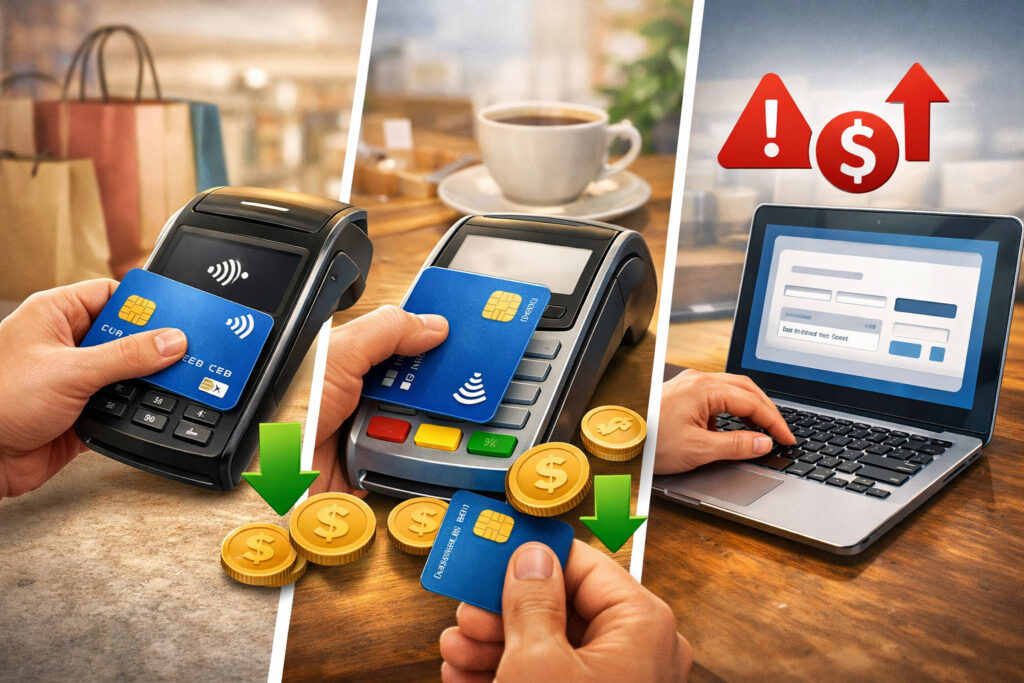
How you accept the card strongly influences your ability to reach the lowest credit card processing fees.
In many cases:
- Tap (contactless) and chip transactions price better than keyed entry.
- Keyed entry often costs more due to higher fraud risk.
- Card-not-present ecommerce generally costs more than in-person.
Action steps that commonly reduce fees:
- Use modern terminals that support tap and chip reliably.
- Train staff to avoid “manual entry” unless necessary.
- Fix POS prompts that cause fallback (swipe/keyed) when the chip fails.
- For phone orders, use secure payment links or hosted checkout instead of keying.
The cheapest acceptance method is usually the one that produces the cleanest, most verifiable transaction with the lowest fraud risk—because that’s how the ecosystem prices risk.
Optimize Ecommerce and Invoicing to Avoid Extra Cost
Online sellers can still get the lowest credit card processing fees, but it requires tighter settings.
Key optimizations:
- Turn on AVS and CVV checks (and review decline rules so you don’t block good customers).
- Use a gateway that supports tokenization and modern fraud tools.
- Keep chargebacks low—excessive disputes can indirectly raise costs through programs, fees, and stricter risk controls.
- Make descriptors clear and customer support easy to reach to prevent “friendly fraud.”
Also pay attention to credential-on-file and recurring billing settings. Storing cards properly (tokenized, compliant) reduces friction and can reduce risk flags.
Finally, settle batches promptly. Delayed settlement can push transactions into less favorable categories depending on program rules and timing.
These steps won’t just lower costs—they’ll make your checkout more reliable, which helps you grow while keeping lowest credit card processing fees realistic at scale.
Negotiate Processor Markup Like a Buyer, Not a Beggar
Markup is where the biggest negotiable savings live. To get the lowest credit card processing fees, negotiate these items specifically:
- Markup rate and per-transaction fee (on interchange-plus)
- Monthly minimums (remove or reduce)
- PCI program fees (avoid overpriced add-ons; aim for fair, standard fees)
- Gateway fee (especially if you already pay for an ecommerce platform)
- Statement fee / regulatory fee / noncompliance fee (ask for a clean fee schedule)
Negotiation tips that work:
- Bring your monthly volume, average ticket, and card-present vs online mix.
- Ask for a written fee schedule—no verbal promises.
- Use competitive offers, but compare apples-to-apples (same model, same fees).
- Ask for interchange-plus with no junk fees and no long-term lock.
A provider who resists transparency is rarely the provider who will deliver the lowest credit card processing fees over time.
Watch for Hidden Fees That Quietly Inflate Your Bill
Many businesses think they have the lowest credit card processing fees—until they audit the statement.
Common hidden cost sources:
- “Non-qualified” surcharges in tiered pricing
- Monthly “account maintenance” stacks (multiple small fees)
- Separate PCI “program” fees plus “noncompliance” penalties
- Equipment lease payments that cost far more than the terminal
- Extra batch fees, ACH fees, or gateway add-ons you don’t use
Ask for these two documents:
- A full fee schedule (every fee, every condition)
- A sample merchant statement that shows interchange, assessments, and markup clearly separated
If your provider can’t explain a fee in one sentence, it’s probably not helping you reach the lowest credit card processing fees.
Use Surcharging, Cash Discounting, or Convenience Fees Carefully
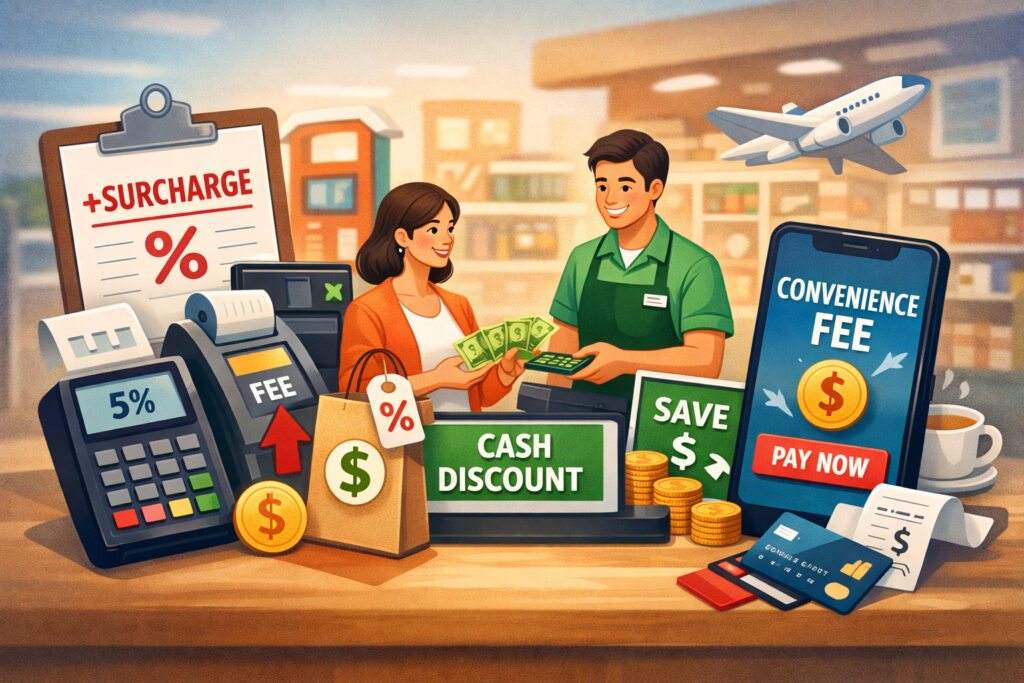
Cost recovery can reduce your net processing expense—but only if you do it correctly and legally.
In many states, credit card surcharging is permitted, but rules vary significantly and require proper disclosures, receipts, and caps. Federal law is often discussed as allowing up to 4%, while major networks can impose their own limits (commonly cited as 3% in network rules), and state-level restrictions can apply.
Important practical points:
- Surcharging typically applies to credit cards (not debit) under network rules.
- You must disclose the surcharge clearly at the point of entry and checkout.
- You must configure the program correctly to avoid customer complaints and compliance problems.
Alternatives:
- Cash discount programs (price shown as cash price with a non-cash adjustment)
- Convenience fees for specific channels (like online bill pay) when rules permit
- Dual pricing in some setups
Because the rules can be technical and state-dependent, many businesses use a compliance guide from an established trade group as a starting point and confirm the details for their situation.
Used responsibly, cost recovery can be a path to the lowest credit card processing fees net of offset—without eroding trust.
Control Fraud and Chargebacks to Protect Your Pricing
Fraud doesn’t just cost you in lost goods and chargeback fees. Over time, excessive disputes can lead to:
- Higher risk reserves
- Stricter approval/underwriting
- Program monitoring and additional fees
- Lost negotiating leverage
To support the lowest credit card processing fees, build a prevention checklist:
- Use strong order verification for high-risk items
- Match billing/shipping signals and velocity patterns
- Require signatures or delivery confirmation for expensive shipments
- Keep refund and cancellation policies simple and visible
- Respond to disputes quickly with clear documentation
Low dispute ratios make processors more comfortable offering better markup and fewer restrictive terms—both essential to achieving the lowest credit card processing fees long-term.
Match Your Business Type to the Right Processor Setup
Different industries generate different fee profiles. If you want the lowest credit card processing fees, choose a setup that fits your operational reality.
Examples:
- Retail with low fraud: prioritize fast settlement, strong POS integration, and interchange-plus pricing.
- Service businesses: focus on invoicing tools, card-on-file settings, and avoiding keyed-entry overuse.
- Ecommerce: prioritize gateway quality, fraud tools, and clean AVS/CVV handling.
Also consider whether you need:
- Multiple locations
- Tips and split tender
- Subscription billing
- Level 2/Level 3 data capture (for certain B2B and purchasing card scenarios)
Fit matters. A “cheap” processor that doesn’t support your real workflow can increase downgrades, disputes, and inefficiencies—pushing you away from the lowest credit card processing fees in practice.
Equipment and Gateway Choices Can Raise or Lower Total Fees
Your terminal and gateway decisions impact fees more than most people expect.
Bad setups that increase costs:
- Outdated terminals causing swipe fallback and manual entry
- Gateways with high per-transaction “handling” fees
- Multiple overlapping monthly fees (POS + gateway + processor)
- Slow or unstable checkout causing retries and duplicate auths
Smart setup moves:
- Use modern terminals that support contactless reliably
- Choose gateways that integrate cleanly with your cart and fraud tools
- Reduce “middlemen” where possible (but don’t sacrifice redundancy for uptime-sensitive businesses)
The path to the lowest credit card processing fees isn’t just “cheaper rates.” It’s eliminating technical friction that silently pushes transactions into higher-cost categories.
Use Statement Audits to Find Savings Opportunities Every Quarter
A one-time negotiation helps. Regular audits keep your lowest credit card processing fees from drifting upward.
What to review quarterly:
- Effective rate trend
- Top fee increases month-over-month
- Keyed entry percentage
- Downgrade counts (if provided)
- Chargeback ratio
- New monthly fees that “appeared”
Also monitor network and program changes. Interchange and network fee updates happen periodically and can affect different segments differently. The networks publish rules and fee education for merchants and partners, and changes can show up even if your provider didn’t change markup.
Treat this like utilities: you don’t negotiate once and forget it—you track usage and rate changes to keep the lowest credit card processing fees intact.
How Competition, Regulation, and Settlements May Affect Future Fees
Processing fees are shaped by business forces and policy debates. Looking ahead, several developments could influence what “lowest” looks like in the next few years:
1) Merchant-network settlement pressure
Major merchant disputes and settlements can push incremental fee relief or rule flexibility. For example, a widely reported settlement announced November 10, 2025 proposed average interchange reductions over multiple years and greater flexibility around card acceptance rules, pending court approval.
2) Legislative competition efforts
Ongoing policy proposals aim to increase routing competition and address swipe fee dynamics. Coverage of the Credit Card Competition Act debate highlights the tension: merchants argue it could reduce costs, while opponents argue it could reduce rewards funding and change the market.
3) Continued network rule changes
Network programs evolve, especially around data quality, small business cards, and ecommerce fraud controls. Recent guidance on business card data programs suggests some merchants may see cost exposure if they don’t meet updated requirements.
Best Practices Checklist to Lock In the Lowest Credit Card Processing Fees
If you want an actionable game plan for the lowest credit card processing fees, use this checklist:
Pricing and provider
- Choose interchange-plus (in most cases)
- Negotiate markup + per-transaction fees
- Eliminate unnecessary monthly and compliance add-ons
- Avoid long-term equipment leases
Checkout and processing quality
- Prefer tap/chip over keyed entry
- Enable AVS/CVV for online transactions
- Settle batches daily
- Reduce downgrades with correct data capture
Risk control
- Improve fraud screening
- Reduce chargebacks with clear policies and support access
Ongoing management
- Audit statements quarterly
- Track effective rate and keyed-entry percentage
- Monitor network and rule updates that could affect your card mix
This isn’t theory—it’s how disciplined operators consistently move toward the lowest credit card processing fees while keeping customer experience smooth.
FAQs
Q.1: What is a “good” processing rate if I’m trying to get the lowest credit card processing fees?
Answer: A “good” rate depends on your card mix and how you accept payments. Rewards cards, business cards, and online transactions can raise underlying costs even with a fair processor markup.
The best benchmark is your effective rate trend and your markup transparency. If you can clearly see interchange, assessments, and a reasonable markup—and your effective rate improves as you reduce keyed entry and downgrades—you’re moving toward the lowest credit card processing fees for your model.
Q.2: Is interchange-plus always the cheapest option?
Answer: Interchange-plus is often the strongest path to the lowest credit card processing fees because it’s transparent and negotiable on markup. However, very small or brand-new businesses may prefer flat-rate pricing early on for simplicity. As volume stabilizes, interchange-plus usually becomes more cost-effective.
Q.3: Can I legally surcharge customers to offset fees?
Answer: Often yes, but rules vary by state and require specific disclosures and limits. Network rules and federal/state restrictions can apply, and limits are frequently cited in compliance guides (commonly 4% under federal discussion and lower network limits depending on rules).
Because requirements vary, confirm the rules for your state and your acceptance setup before implementing surcharging.
Q.4: Why did my fees go up even though my processor said my rate didn’t change?
Answer: Because interchange and network fees can change, and your transaction mix can shift. If more customers used rewards cards, more orders moved online, or more transactions were keyed in, your effective rate can rise even if markup didn’t. Networks publish fee and rule guidance, and periodic updates can affect categories differently.
Q.5: What’s the fastest way to lower my effective rate?
Answer: For many businesses, the fastest wins are:
- Reduce keyed entry
- Fix downgrade triggers (AVS, settlement timing, data capture)
- Move from tiered to interchange-plus
- Negotiate and simplify markup fees
These changes directly target the drivers that prevent the lowest credit card processing fees.
Q.6: Are “zero-fee” processing programs really free?
Answer: Usually not. Many “zero-fee” programs shift costs via customer pricing adjustments or service fees. They can be legitimate if implemented transparently and compliantly, but you still need to review the true fee schedule, customer disclosures, and how refunds/chargebacks are handled. The goal is net savings and compliance—not just marketing.
Conclusion
The lowest credit card processing fees don’t come from a random “best rate” someone posted online. They come from controlling the variables that shape your costs: transaction quality, acceptance method, data completeness, fraud risk, and processor markup discipline.
Start by baselining your effective rate. Move to transparent pricing (usually interchange-plus). Reduce downgrades with better checkout settings and daily settlement. Negotiate markup and remove unnecessary monthly fees.
If you use surcharging or other cost-recovery programs, do it carefully and compliantly, because rules vary by state and by network.
Finally, stay alert. Interchange programs and network rules evolve, and ongoing policy debates and settlements may reshape the landscape over time. Businesses that review statements quarterly and optimize continuously are the ones that keep winning—year after year—on the lowest credit card processing fees.