By alphacardprocess March 18, 2026
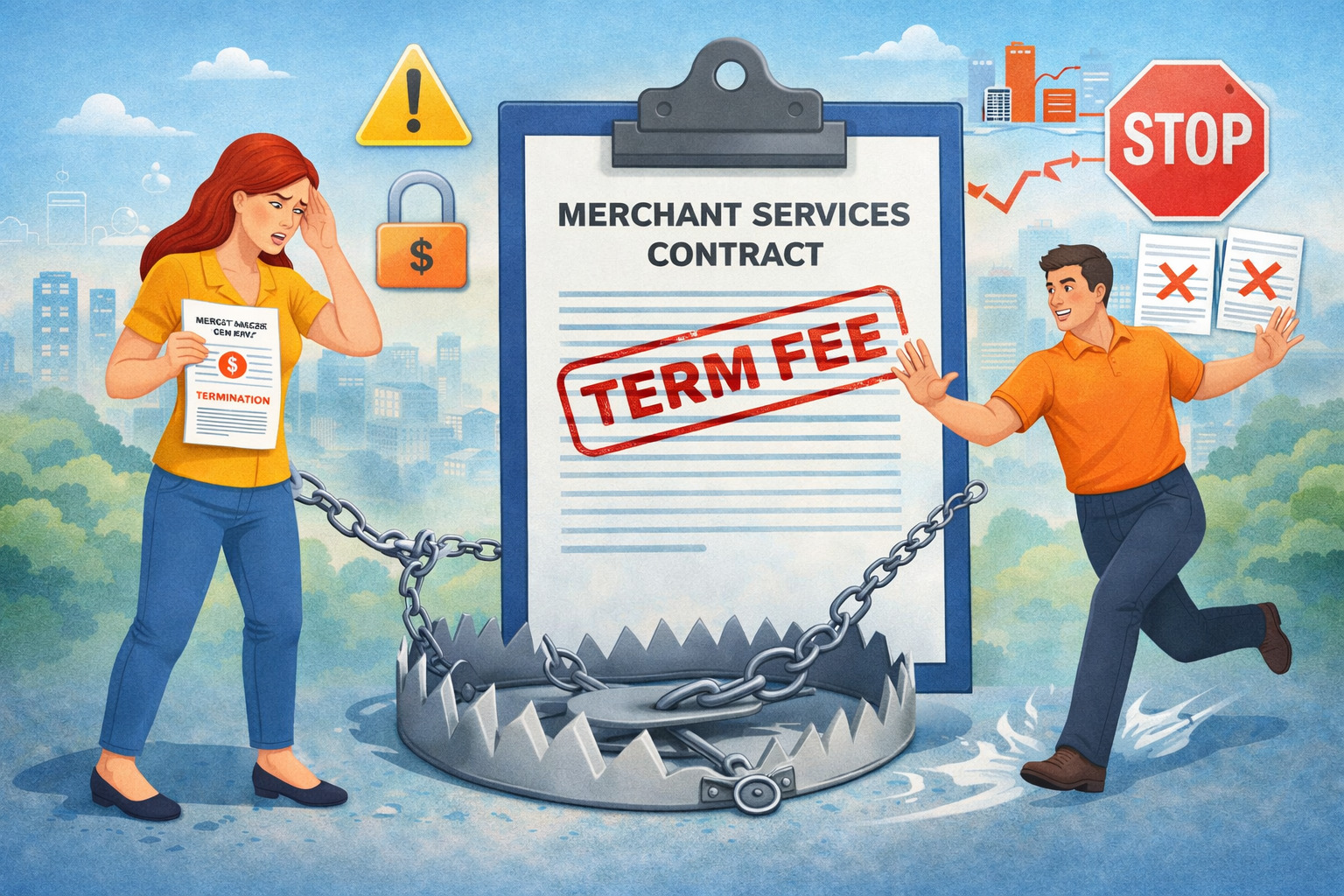
Signing up for a merchant account can feel simple at first. A sales rep talks about low rates, fast approval, new equipment, and better support. Then, months later, the business wants to switch providers or close the account and discovers a cancellation fee that was never fully understood.
That is why learning how to Avoid Early Termination Fees Merchant Account issues matters so much. These fees can turn what looked like a good deal into an expensive lesson. In many cases, the real pain is not just the fee itself. It is the feeling of being boxed into a contract that no longer fits the business.
For business owners, managers, and decision-makers, the smartest move is to understand the contract before signing it. Early Termination Fees in Merchant Services are often avoidable when you know where to look, what to ask, and which clauses signal trouble. A good merchant services relationship should support growth, not punish change.
This guide breaks down Merchant Account Early Termination Fees in a practical way. You will learn how these fees work, which contract clauses create risk, how to spot red flags, how to negotiate better terms, and what to do if you are already locked into a difficult agreement. You will also get a comparison table, real-world examples, and a step-by-step checklist to help you choose with confidence.
If you are comparing providers, it also helps to understand how pricing works beyond the advertised rate. Resources on merchant services pricing models and the true cost of accepting cards can give helpful context as you review offers and contract fine print.
What It Really Means to Avoid Early Termination Fees in a Merchant Account
To avoid an early termination fee, a business must do more than skip a cancellation charge. It must avoid entering an agreement that makes leaving expensive, confusing, or risky in the first place. That means looking at the full relationship between the merchant and the processor, not just the headline rate.
A merchant service contract often includes more than one document. There may be an application, a payment processor agreement, a program guide, pricing schedules, equipment terms, and addendums.
The early termination fee may appear clearly in one document, vaguely in another, or be tied to a broader clause about service agreement exit terms. When merchants only review the sales summary, they miss how the full agreement works.
In simple terms, Avoid Early Termination Fees Merchant Account means choosing terms that let the business exit without a harsh penalty if the service no longer fits.
That may involve selecting a month-to-month provider, negotiating contract renewal terms, removing a liquidated damages clause, or making sure the merchant services cancellation policy is realistic and documented.
Not every contract term is unfair. Providers sometimes need reasonable notice, equipment return rules, or clear billing cutoffs. The issue is whether the contract uses these terms to create a fair business relationship or to trap the merchant.
A transparent agreement tells you how long the term lasts, how renewal works, what happens if you cancel, whether equipment is leased or owned, and what fees apply.
Business owners should also remember that switching providers is common. A retail store may outgrow its first point-of-sale setup. An ecommerce company may need better gateway features. A service business may want a provider with simpler invoicing. Growth changes payment needs, so flexibility matters from the start.
Why Early Termination Fees Feel So Frustrating to Merchants
The frustration usually starts with expectations. A merchant signs up thinking the main issue is processing cost. Later, the business discovers that the real risk was the contract structure, not the rate. That disconnect is what makes cancellation fees feel so painful.
Many merchants assume they can leave whenever service becomes too expensive, support gets weak, or a better provider comes along.
That seems reasonable. But some contracts include long initial terms, auto-renewal periods, notice windows, non-cancellable lease obligations, or processor switching costs that were not fully discussed in the sales conversation. Suddenly, leaving is not a simple business decision. It becomes a contract dispute.
Another reason these fees create so much resentment is that they often appear at the worst time. A seasonal merchant may want to pause during slower months. A growing business may need better integrations.
A struggling business may be cutting expenses. In each case, the merchant is already under pressure. An unexpected cancellation fee only adds stress.
There is also an emotional side. Merchants feel misled when verbal promises do not match written terms. A rep may say, “You can cancel anytime,” while the signed documents contain a flat termination fee, a liquidated damages formula, or remaining monthly minimum charges. Since written agreements usually control the relationship, the merchant ends up feeling stuck.
That is why prevention is better than cleanup. The best way to Avoid an ETF in Merchant Contracts is to slow down before signing, review every related document, and refuse to rely on sales language alone. A well-informed merchant is much harder to trap.
Legitimate Contract Terms vs Avoidable Cancellation Penalties
Not every fee connected to a contract is automatically abusive. Some terms are legitimate because they reflect real administrative or service costs. The problem is when these terms are poorly disclosed, oversized, or layered in ways that most merchants would never expect.
A legitimate term might include a short notice period before account closure, such as written notice before the next billing cycle. It could also include a reasonable equipment return requirement if the provider supplied hardware under a fair rental arrangement. These terms help the provider manage service transitions without surprising the merchant.
By contrast, avoidable or poorly disclosed cancellation penalties often go much further. A flat fee may be charged no matter how long the merchant has been with the provider. A liquidated damages clause may demand the estimated value of future monthly fees for the rest of the term.
A non-cancellable lease may require payments to continue even after the processing account is closed. Auto-renewal language may quietly extend the contract if cancellation is not submitted within a narrow window.
The difference usually comes down to transparency and proportionality. If a term is clearly disclosed, easy to understand, and connected to a real operational need, it is easier to defend. If it is buried in contract fine print, triggered by vague procedures, or far more expensive than the service being ended, it deserves scrutiny.
Merchants do not need to become contract lawyers. They just need to compare what the provider promises with what the paperwork actually says. That gap is where hidden merchant fees and surprise termination costs tend to live.
How Early Termination Fees in Merchant Services Are Structured

Early Termination Fees in Merchant Services are not always called the same thing. Some agreements label them as cancellation fees. Others refer to liquidated damages, account closure fees, termination charges, or buyout obligations. The wording changes, but the financial impact can be very real.
One reason merchants get caught off guard is that these fees are often layered. A provider might charge a flat cancellation fee, keep billing monthly account fees until the account is formally closed, and leave the merchant responsible for a separate equipment lease. That means the visible fee is only part of the total exit cost.
To make better decisions, business owners should understand how Merchant Account Early Termination Fees are usually built. Once you know the common structures, it becomes easier to identify red flags and ask sharper questions before signing.
The table below shows the most common fee types and why they matter.
| Fee Type | How It Usually Works | Why It Can Be Costly | What to Ask Before Signing |
| Flat cancellation fee | A fixed amount charged if the account ends before the contract term expires | Easy to trigger and often applies even when the business has used the service for a long time | Is there any early termination fee at all, and can it be removed? |
| Liquidated damages clause | A formula based on projected lost revenue or remaining term value | Can cost far more than a simple flat fee | How is the amount calculated, and is there a cap? |
| Remaining monthly minimum charges | Merchant must pay minimums for the rest of the term | Creates a large total bill if many months remain | Are monthly minimums due after cancellation? |
| Auto-renewal penalty exposure | Contract renews unless canceled during a notice window | Merchants miss the notice deadline and become locked in again | What is the exact notice period and renewal term? |
| Equipment lease penalties | Separate lease continues even if processing ends | Total lease cost may exceed hardware value by a wide margin | Is the equipment leased, rented, or owned? Is the lease cancellable? |
| Account closure or administrative fees | Charges tied to closing or final processing | Small fees add up when combined with other exit costs | Are there closure fees, final statement fees, or return fees? |
| Processor contract buyout limitations | New provider offers buyout but only covers part of the cost | Merchant still pays the difference | What expenses are actually covered in writing? |
A merchant comparing providers should review these items alongside pricing. Helpful background on transparent models can be found in this guide to interchange plus pricing for merchant accounts, since fee visibility often affects how easy contracts are to evaluate.
Flat Cancellation Fees and Remaining Monthly Charges
The most familiar termination fee is the flat cancellation fee. It is usually presented as a simple dollar amount charged if the merchant exits before the initial term ends. On the surface, this looks straightforward.
In practice, it can still be frustrating because it is often disclosed casually and rarely emphasized during the sales process.
A flat fee may seem manageable compared with a more complex penalty. But merchants should not assume it is harmless. A fixed amount can still be painful if the business wants to close due to poor service, increased fees, or changing operational needs.
The problem becomes worse when the provider also continues billing monthly fees until the cancellation is processed according to strict written instructions.
Remaining monthly minimum charges are another common trap. A contract may require the merchant to meet a monthly processing minimum. If the business cancels early, the provider may attempt to charge the remaining monthly minimums for the rest of the term. That can be expensive, especially for merchants who signed a long agreement and want to leave early.
A merchant that thinks only in terms of one cancellation fee can miss the bigger picture. The real question is total exit cost. That includes final monthly fees, notice period billing, batch or gateway fees, account closure fees, and any minimum commitments still owed.
When reviewing contract terms, merchants should ask for a direct answer to this question: “If I close this account early, what is the full amount I could owe under every related document?”
Liquidated Damages Clauses and Why They Can Be Worse
A liquidated damages clause is often more dangerous than a flat fee because it is not fixed. Instead, it attempts to estimate what the provider would have earned if the merchant stayed for the entire contract term. That means the charge can grow based on monthly fees, expected volume, or the number of months remaining.
For merchants, this clause is a major red flag because it can produce a surprisingly high bill. A business may think it is leaving a contract with a moderate penalty, only to find that the processor is demanding a larger sum based on projected future revenue. The longer the remaining term, the more painful this can become.
These clauses are especially risky when the formula is vague. Some agreements describe liquidated damages in broad language without showing a clear example. That makes it hard for a merchant to evaluate the real exposure before signing. If you cannot calculate the exit cost from the contract, the term deserves extra caution.
Liquidated damages may be framed as standard business protection, but merchants should still question whether the amount is fair and whether it reflects real losses or simply discourages switching. A provider confident in service quality should not need an excessive exit penalty to keep customers.
This is why payment processing agreement review matters. Never assume a termination section is minor just because it is short. A brief clause can carry major financial consequences. If you see the words “liquidated damages,” “estimated loss,” or “remaining term value,” pause and get exact clarification in writing before moving forward.
Equipment Lease Penalties and Separate Lease Documents
Many merchants focus on the processing agreement and forget that equipment can create a separate financial obligation. This is one of the most expensive mistakes in merchant account contracts. A provider may say the terminal, POS device, or payment equipment comes with the deal, but the merchant later discovers it was placed under a separate lease.
That matters because an equipment lease may not end when the processing account ends. In some cases, the lease is non-cancellable. That means the merchant can stop processing with the provider and still owe lease payments until the lease term is complete. Over time, the total lease cost can far exceed the actual value of the hardware.
Non-cancellable lease language is one of the clearest merchant contract red flags. It often appears in separate paperwork, sometimes handled by a third-party leasing company. Because the lease is technically separate from the merchant account, canceling the processing service does not cancel the equipment obligation.
This is especially risky for small businesses that only need basic hardware. A simple terminal may be available for outright purchase at a modest cost, yet the lease can stretch over a long period and cost several times more. The merchant ends up paying a premium for the illusion of convenience.
Contract Clauses That Most Often Lead to Surprise Fees

Most surprise fees do not come from one dramatic line in a contract. They come from a pattern of smaller clauses working together. A long term, a renewal clause, a vague cancellation rule, and a lease addendum may each seem manageable on their own. Combined, they can create a contract that is hard to exit and expensive to challenge.
This is where merchant account contract terms deserve close attention. Merchants often focus on rate quotes, transaction fees, and monthly pricing.
Those matter, but service agreement exit terms often determine whether the relationship stays healthy over time. If a provider knows the merchant will face a penalty for leaving, the provider has less pressure to earn loyalty through service and pricing.
A good agreement should make the path into the relationship clear and the path out equally clear. If the exit process is harder to understand than the signup process, that is a warning sign. Clear contracts reduce confusion. Murky contracts create leverage for the provider.
It helps to think of contract review as risk management. You are not trying to predict failure. You are making sure the business keeps flexibility if circumstances change. Retail merchants may relocate. Ecommerce businesses may shift platforms. Service businesses may add mobile payments.
Seasonal merchants may need lower fixed costs. Growing companies may want better integrations or reporting. Flexibility is not a luxury. It is part of making a smart decision.
For merchants who want to compare cost beyond rates, resources on how lowest-rate merchant services actually work and cheapest card transaction fees can help frame the difference between a low advertised offer and a healthier long-term agreement.
Auto-Renewal Language and Contract Renewal Terms
Auto-renewal is one of the most common reasons merchants end up paying fees they thought they had already avoided. A contract might have an initial term that feels manageable, but the fine print allows it to renew automatically unless the merchant cancels within a specific notice window.
This becomes a problem when the notice window is narrow or easy to miss. A merchant may assume the agreement simply ends after the stated term.
Instead, it renews for another period and exposes the business to a new early termination fee if they try to leave after the renewal begins. That is why contract auto-renewal clauses deserve close attention from the beginning.
The risk becomes even greater when the renewal language is buried in a program guide or addendum rather than the main sales paperwork. Many merchants never see it until they try to cancel. By then, the provider may say the contract has already renewed and the business is still bound by the termination terms.
A better approach is to ask three direct questions before signing: How long is the initial term? Does the contract renew automatically? What exact notice is required to stop renewal? Then ask for those answers in writing. The wording matters.
A provider that truly offers flexibility should be willing to spell out renewal terms clearly. If the sales rep downplays the issue or says not to worry about it, that is exactly when merchants should pay closer attention.
Vague Cancellation Procedures and Hidden Buyout Costs
One of the easiest ways for a provider to keep charging a merchant is to make cancellation harder than expected. This often happens through vague procedures.
The contract may say the merchant must provide written notice, but not explain where it must be sent, who must receive it, or what information must be included. The result is confusion, delays, and extra billing.
Some agreements require cancellation by certified mail, a signed form, or notice to a specific department. Others demand advance written notice before the next billing cycle.
If a merchant emails a sales rep or tells support by phone, that may not count under the written agreement. The account stays open, fees continue, and the merchant assumes the provider is acting unfairly when the real issue is the contract procedure.
Hidden buyout costs create another layer of risk. A new processor may offer to cover the merchant’s switching cost, but the promise is sometimes limited.
The buyout may apply only to a flat early termination fee, not to an equipment lease, liquidated damages, or account closure charges. If the merchant does not get the buyout details in writing, the remaining balance can be much larger than expected.
This is why merchants should never rely on simple phrases like “easy to cancel” or “we’ll buy out your contract.” The right question is: What exact costs are covered, and what exact steps must I follow to close the account without additional billing?
Long Initial Terms and the Trap of Looking Only at Rates
Long initial terms are dangerous because they reduce flexibility at the very moment many businesses still need it most.
A new merchant may not yet know what reporting tools matter, how customer support performs under pressure, or whether the processor integrates well with existing systems. Locking into a long term too early increases the risk of paying to escape later.
The trap becomes even stronger when the provider leads with attractive pricing. A business owner sees a low transaction rate and assumes the overall deal is strong. But merchant services pricing is only part of the story.
A low rate paired with a long contract, strict cancellation terms, and non-cancellable hardware can cost more over time than a slightly higher rate with full flexibility.
This is why focusing only on rates is one of the most common contract mistakes. Merchants should compare the total structure of the relationship, including monthly fees, merchant service contract fees, statement review requirements, lease exposure, and exit terms.
A provider with transparent pricing and no early termination fee provider status may be a better fit even if the initial quoted rate is not the absolute lowest.
A strong offer should hold up under full review. If the pricing looks good only when the contract details are ignored, it is not really a good offer. It is just a low number attached to a high-risk agreement.
How to Review Merchant Service Agreements Before You Sign
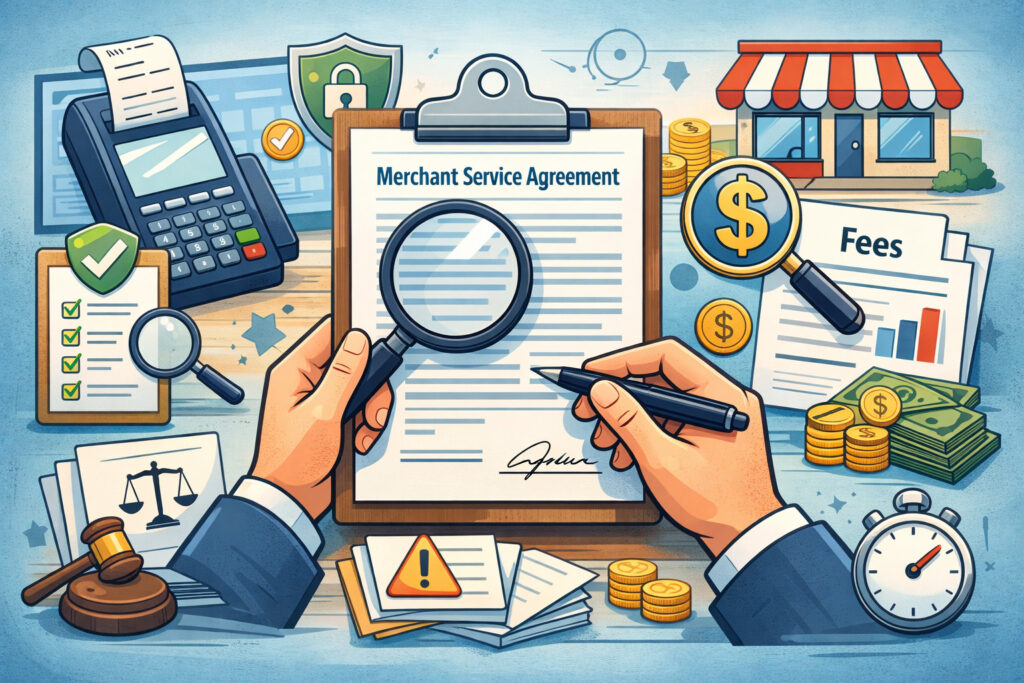
The safest way to avoid contract trouble is to review the entire agreement as a package. Too many merchants read only the application or sales sheet. But the payment processor agreement may incorporate other documents by reference, which means those documents are still part of the deal even if they were not discussed during the sales call.
A complete review should include the merchant application, fee schedule, program guide, terms and conditions, equipment agreement, lease documents, gateway terms, and any addendums. If a rep says a document is standard and does not need attention, that is a reason to read it more carefully, not less.
This process does not have to be overwhelming. The goal is to focus on the sections that control cost, flexibility, and obligations. Look for term length, auto-renewal, cancellation fees, liquidated damages, monthly minimums, PCI-related charges, equipment terms, closure procedures, and fee disclosure language. Then compare those sections with what was promised during the sale.
A strong review also includes practical follow-up questions. If a term is unclear, ask for clarification in writing. If a rep says a fee will not apply, ask for that to be reflected in the contract or an approved written addendum. Verbal assurances are weak protection when a billing dispute starts later.
Merchants should also review how pricing works on actual statements. If possible, request a sample statement or pricing illustration. Understanding the provider’s fee structure makes it easier to spot hidden merchant fees later.
Review All Documents Together, Not in Isolation
One of the biggest mistakes merchants make is reviewing each document separately, or worse, reviewing only one document and assuming it tells the whole story. Providers often spread important terms across multiple pages and forms.
The application might mention a contract term. The program guide may define renewal rules. The lease agreement may create separate obligations. The cancellation procedure may appear in a different section entirely.
When these documents are read in isolation, the merchant misses how they work together. A sales summary might show attractive rates. The main application might mention a short term.
But the program guide may allow renewal, while the lease agreement adds years of equipment payments that survive account closure. The total risk only becomes clear when everything is viewed together.
A practical way to review is to highlight each section tied to money, time, and exit. Mark all fees, term lengths, renewal language, notice requirements, and equipment obligations. Then create a simple summary for yourself: how long am I committed, what can I be charged monthly, and what happens if I leave?
This approach also helps expose contradictions. If the rep says one thing and the documents say another, trust the documents until corrected in writing. The written agreement is what usually controls billing and enforcement later.
Questions Every Merchant Should Ask Before Signing
Smart questions can prevent expensive surprises. Many merchants feel uncomfortable asking direct contract questions because they do not want to seem difficult. That hesitation can be costly. A responsible provider should be willing to answer clearly, especially when the questions involve money and contract commitments.
Start with the most direct issue: Is there any early termination fee? Do not stop at a yes or no. Ask how it is calculated, whether there is a flat fee, whether liquidated damages apply, whether monthly minimums continue, and whether account closure fees exist. Then ask the same questions about equipment.
Next, ask about contract renewal terms. How long is the initial term? Does it renew automatically? What notice is required to cancel before renewal? Where must the cancellation notice be sent? Can cancellation be submitted by email, or is another method required? These questions reveal whether the provider is easy to leave or hard to escape.
Also ask what happens if the business changes. Can pricing be renegotiated if volume grows? What if the merchant becomes seasonal, shifts online, or changes POS systems? A contract that does not allow flexibility can become a bad fit quickly.
Finally, ask the rep to send written confirmation of all key promises. If a fee is waived, get it documented. If the provider says the account is month to month, make sure the contract says that too. Good relationships welcome documentation. Poor ones avoid it.
How Statement Review Helps You Catch Fee Problems Early
Contract review does not end after signing. Statement review is one of the best ways to catch fee disclosure issues and hidden billing before they become bigger problems.
Many merchants set up processing and then ignore monthly statements unless there is a dramatic increase in cost. That gives providers room to introduce or continue charges without immediate pushback.
A useful statement review should check for recurring monthly fees, PCI charges, gateway fees, minimum charges, statement fees, regulatory-style fees, non-compliance penalties, and any new line items that were not discussed at onboarding.
If the account was supposed to have no early termination fee, confirm whether the statement or support documents show any contract term references that suggest otherwise.
Statement review is also important when you submit a cancellation request. Continue monitoring statements to make sure billing actually stops.
Some merchants assume that sending a notice is enough. Then they discover a month later that the account remained open because the provider claimed the notice was incomplete or sent to the wrong department.
Good contract management is not dramatic. It is steady attention. A few minutes of statement review each cycle can save a business from months of confusion and prevent small charges from turning into a large dispute.
How to Avoid ETF in Merchant Contracts Through Negotiation and Smarter Provider Selection

The strongest way to Avoid an ETF in Merchant Contracts is to negotiate before signing and choose providers whose business model does not depend on locking merchants in. Many business owners assume merchant service terms are fixed. In reality, some contract terms are negotiable, especially when the merchant asks early and compares options.
The key is to negotiate beyond rates. Lower pricing matters, but flexibility often creates more long-term value than a tiny rate reduction. A merchant that saves a small amount on processing but gets trapped in a long contract may regret the deal quickly. A slightly higher rate with better exit terms can be the smarter choice.
Provider selection should also reflect business type. A stable retailer with predictable volume may accept different terms than a seasonal merchant, mobile service business, or fast-growing ecommerce brand.
The more change you expect in the business, the more valuable contract flexibility becomes. If you may need new software, different hardware, or a better gateway later, you should not sign a rigid agreement without a strong reason.
One of the best signals of provider quality is transparency. Clear pricing, simple documents, direct answers, and written confirmations all point to a healthier relationship. By contrast, pressure tactics, vague answers, and resistance to documenting promises usually suggest future billing problems.
When comparing providers, focus on whether they earn the relationship through service and pricing or defend it through contract penalties. That difference tells you a lot.
Negotiating ETF Waivers, Shorter Terms, and Better Exit Language
Merchants often have more leverage than they think, especially before the account is approved and boarded. That is the best time to request contract changes. Once the account is active, the provider has less incentive to adjust terms unless the merchant brings meaningful volume or is prepared to leave.
Start by asking for the early termination fee to be removed completely. If the provider says no, ask for a month-to-month agreement, a shorter initial term, or a reduced flat fee instead of liquidated damages. The goal is not always perfection. It is lowering risk.
Next, address the renewal language. Ask for no automatic renewal, or at least a short renewal period with a simple cancellation process. If the contract auto-renews, request that the notice period be reasonable and that email notice be accepted. The easier the exit process, the lower the chance of surprise fees later.
Equipment terms should also be negotiated. Whenever possible, buy equipment outright or use a fair rental structure instead of a long non-cancellable lease. If the provider bundles hardware into the deal, ask for the total cost and who owns it at the end. If there is a separate lease company involved, review that paperwork with extra care.
Most importantly, get every approved change in writing. An email from an authorized company representative is better than a casual verbal assurance. An official addendum is even better.
Why Month-to-Month and No Early Termination Fee Providers Matter
A month-to-month agreement gives merchants breathing room. It allows the provider to earn the business continuously instead of relying on a contract penalty to keep the account. For many businesses, that flexibility is worth a lot. It reduces switching costs, lowers fear of change, and makes it easier to upgrade when payment needs evolve.
No early termination fee provider options are especially valuable for businesses with uncertain growth paths. An ecommerce merchant may need new fraud tools later. A service company may switch invoicing systems. A seasonal seller may need to reduce fixed expenses. In all these cases, flexible contract terms help the business stay agile.
That does not mean every month-to-month provider is automatically the best choice. Merchants still need to compare merchant services pricing, support quality, integrations, funding, and statement clarity. But when all else is close, the provider with simpler exit terms often presents less risk.
Flexible providers also tend to be more transparent overall. They are usually more comfortable with pricing comparison because they know merchants can leave if expectations are not met. That pressure often leads to better onboarding, better support, and fewer hidden fees.
For merchants who have been burned before, month-to-month terms can also restore confidence. Instead of worrying about a contract trap, the business can focus on whether the provider continues delivering value.
Document Every Promise in Writing
A merchant account sale often includes informal assurances. The rep says there is no cancellation fee, the equipment is included, the pricing will stay stable, and support will handle everything.
These statements may be made with confidence and good intentions. But if they are not written into the agreement or an approved written addendum, they can be difficult to enforce later.
This is one of the most costly mistakes merchants make. They trust the conversation more than the paperwork. Then, when a billing issue appears, the company points back to the signed documents. The merchant is left arguing from memory while the provider is billing from contract language.
The solution is simple but important: document all promises in writing before signing. If the provider says there is no early termination fee, ask them to state that clearly in an email or addendum.
If they say the account is month to month, make sure the contract reflects it. If they promise a processor contract buyout, get the covered amount, conditions, and timeline in writing.
Written documentation helps in two ways. First, it gives the merchant clarity before committing. Second, it creates evidence if billing disputes arise later. That evidence may not solve every problem instantly, but it puts the merchant in a much stronger position.
Common Mistakes That Lead to Merchant Account Early Termination Fees
Most expensive contract problems start with a few avoidable mistakes. Business owners are busy, and merchant account paperwork rarely feels like a priority. The result is that merchants rush, assume, or overlook details that later become costly. Understanding these mistakes is one of the best ways to protect the business.
A common issue is focusing only on rates. Merchants naturally want lower payment costs, so they compare percentage fees and per-transaction charges. But a low rate can distract from long terms, auto-renewal, equipment lease penalties, or vague cancellation rules. The deal looks strong until the business tries to leave.
Another major mistake is assuming verbal promises override written terms. They usually do not. If the written agreement says one thing and the sales rep said another, the contract will generally control billing. That is why documentation matters so much.
Merchants also get into trouble by signing before reviewing every related document, especially lease paperwork and addendums. And even when they understand the contract, they may fail to submit cancellation notices correctly. That leads to continued billing and renewed terms that could have been avoided with a more careful process.
The good news is that these are preventable problems. Once merchants understand the patterns, they can build better habits and reduce risk significantly.
Signing Before Reading the Full Agreement
This is the most obvious mistake, but it remains extremely common. A busy owner signs quickly because the sales pitch feels urgent. The rep says the offer is standard, the setup is fast, and everything else can be handled later. The merchant assumes the paperwork matches the discussion and moves on.
The problem is that merchant agreements often hide key details in supporting documents. A business may sign what looks like a simple application without noticing that the application incorporates a long program guide or a separate equipment agreement.
Since the merchant did not read those documents, they miss the cancellation policy, renewal terms, or fee structure.
This mistake is especially common when businesses are solving an immediate need. A new store needs to open. An online seller wants to accept payments quickly. A service business needs mobile processing. Speed feels important, but speed without review can create months or years of contract trouble.
The better approach is to pause. Request the full agreement package. Read every document tied to pricing, term, equipment, and cancellation. If anything seems unclear, do not sign until the provider explains it and confirms key points in writing. A short delay at the beginning can prevent a painful exit cost later.
Missing Lease Language and Hidden Addendums
Many merchants understand that the processing agreement matters. Fewer realize that lease language can create an even bigger long-term obligation. This is why hidden addendums and separate equipment documents are so dangerous. They often look secondary, but they may control a large share of the merchant’s future cost.
A provider may present the equipment as part of the overall package. The merchant assumes the hardware is included with the service. Later, a separate bill appears from a leasing company, or the contract reveals that the terminal was financed under a non-cancellable lease.
By then, the merchant may be committed to years of payments for equipment that could have been purchased outright for much less.
Hidden addendums create similar risk. A short application may refer to terms found elsewhere, and those extra documents may include fees, renewal rules, or limits on cancellation methods. If the merchant never receives or reviews them carefully, the surprise arrives later when trying to change providers or shut down the account.
The lesson is simple: treat every related document as part of the real contract. If the provider wants a signature on it, it matters. If the application references it, it matters. If it affects money, time, or equipment, it deserves review.
Failing to Cancel Correctly and on Time
Even merchants who understand the contract sometimes make a final mistake during cancellation. They assume that calling support, emailing a sales rep, or moving processing volume away from the account is enough. In many cases, it is not. The written agreement may require formal notice in a specific way and within a specific time frame.
This mistake becomes costly when contracts auto-renew or keep monthly fees active until closure is processed correctly. A merchant may stop using the account and believe the relationship is over.
But because the provider never received valid notice under the contract, billing continues. If the renewal window passes, the merchant can even become subject to a new term.
To avoid this, merchants should review the merchant services cancellation policy before acting. Follow the exact notice method required. Keep copies of all emails, letters, forms, and confirmations. Record dates, names, and case numbers. Check statements afterward to make sure billing stops.
A proper cancellation process is not just an administrative step. It is part of cost control. Many avoidable fees happen not because the merchant lacked the right to cancel, but because the merchant did not follow the required procedure closely enough.
Practical Examples by Business Type
Merchant contract flexibility matters differently depending on the business model. A one-size-fits-all contract can create very different risks for different merchants. That is why it helps to look at practical examples. These situations show how early termination fees and contract traps affect real operations.
Retail stores often care about hardware, uptime, and point-of-sale compatibility. Ecommerce businesses focus more on gateways, fraud tools, and platform integrations.
Service businesses may need mobile processing, invoicing, or recurring billing flexibility. Seasonal merchants need low fixed costs during slow periods. Growing businesses need room to change systems without punishment.
The contract should match the business, not the other way around. Merchants that understand their own likely changes are better prepared to negotiate the right terms at the start. If flexibility is important, the agreement should reflect that clearly.
These examples also show why processor comparison should go beyond rates. The cheapest-looking offer can be the least flexible. A provider may be affordable only as long as the business never changes. That is not a realistic standard for many merchants. Good contracts support change. Bad contracts make change expensive.
Retail, Ecommerce, and Service Business Scenarios
A retail store signs with a provider because the in-store terminal and point-of-sale bundle seem convenient. The rate is competitive, and the equipment arrives quickly. Months later, the store adds inventory features that require a different POS platform.
The merchant discovers the processor account has an early termination fee and the terminal is under a separate lease. Switching now means paying both.
An ecommerce business chooses a payment provider based on a low introductory quote. At first, it worked well enough. As order volume grows, the company needs stronger fraud controls and better subscription tools.
A different processor offers better features, but the existing agreement includes auto-renewal language and a liquidated damages clause. The cost of leaving becomes a barrier to growth.
A service business starts with a mobile card reader and invoicing solution. Later, the business wants a provider that handles deposits, recurring billing, and client payment reminders more efficiently.
The owner learns that the current processor requires written notice during a narrow window and continues charging account fees until all cancellation steps are completed exactly as stated.
In all three examples, the issue is not simply fees. It has lost flexibility. The merchant chose for the present without protecting the future. That is why contract fit matters as much as pricing fit.
Seasonal Merchants and Growing Businesses Need Extra Flexibility
Seasonal merchants often face unique processor switching costs because revenue patterns are uneven. A contract that looks affordable during the busy period may feel expensive during slower months.
Monthly minimums, platform fees, and equipment costs do not disappear just because sales volume drops. If the merchant wants to pause or change providers, an early termination fee can hit at exactly the wrong time.
For seasonal businesses, month-to-month agreements and low fixed-fee structures are especially important. Even if the processing rate is slightly higher, the ability to adjust without penalty often creates more value than a rigid low-rate plan. The contract should fit the rhythm of the business.
Growing businesses face a different problem. Growth changes payment needs quickly. A provider that worked during launch may not work during expansion.
More sales can mean more staff, more locations, more integrations, and greater reporting needs. If the contract does not allow flexibility, the business may be forced to stay with a weaker setup or pay to switch.
That is why growing businesses should treat merchant account negotiation as part of scaling strategy. Build for change. Ask whether the provider supports future needs. If not, do not accept a contract that makes moving later expensive. A flexible agreement protects growth instead of slowing it down.
What to Do If You Are Already Locked Into a Contract With an ETF
Sometimes the business is already committed. The contract is signed, the fee is real, and the merchant wants out. This can feel discouraging, but it does not mean there are no options. The first step is not to panic. It is a review.
Start by gathering every contract-related document. That includes the application, terms and conditions, fee schedule, program guide, lease documents, addendums, and any onboarding emails. Then identify the exact language tied to term length, cancellation, renewal, equipment, and fees. Do not rely on memory. Work from the written record.
Next, compare the contract to what actually happened. Was the fee properly disclosed? Did the provider follow its own terms? Did the account auto-renew because notice was missed, or because the merchant was never clearly told about the renewal process? Is the charge a flat fee, liquidated damages, or a lease obligation? The answers affect the best exit strategy.
From there, merchants can decide whether to challenge the fee, negotiate a waiver, reduce the damage, or time the exit more carefully. In some cases, the least risky choice is to wait until a renewal window approaches. In others, the better choice is to negotiate an immediate resolution based on service failures or billing issues.
The key is to act strategically. Do not assume the first answer from support is final. And do not cancel impulsively without understanding the exposure. A lower-risk exit starts with a full understanding of the contract.
Review the Contract, Challenge Improper Charges, and Ask for a Waiver
Once the documents are in hand, review them line by line. Confirm whether the fee being charged matches the contract language exactly. Providers sometimes apply broad billing practices that do not fit the merchant’s specific agreement. A charge may be listed as a termination fee when the contract shows a different structure, cap, or notice requirement.
If the provider’s charge appears improper, challenge it in writing. Explain the issue clearly and attach relevant contract language or written communications that support your position. If the sales process included written promises that conflict with the charge, include those too. Be professional, specific, and organized.
Even if the fee is technically allowed, asking for a waiver can still work. Providers may waive or reduce a charge to avoid dispute, especially if the merchant has been active, if service problems occurred, or if the business is closing for reasons beyond simple rate shopping. A respectful waiver request often works better than an angry demand.
When asking for a waiver, focus on facts. Mention service failures, undocumented fees, account mismatches, or business changes that make the current arrangement unreasonable. Ask for a practical resolution, not just a complaint response. Providers are more likely to engage when the request is clear and solution-focused.
Plan a Lower-Risk Exit if You Cannot Leave Immediately
Sometimes the contract review shows that leaving immediately would trigger a fee that is hard to avoid. In that case, the goal becomes lowering risk rather than forcing a rushed exit. This may involve planning around notice periods, renewal windows, or the end of a lease cycle.
Start by identifying the earliest date the account can be exited with the least financial impact. Then set reminders well before the notice deadline. Prepare all cancellation documents in advance and confirm the required delivery method. If the contract requires written notice, send it exactly as stated and keep proof.
During this planning stage, merchants should also evaluate replacement providers carefully. Moving from one bad contract into another is not progress. Use the experience to create a stronger comparison process. Review pricing, equipment ownership, cancellation rules, fee disclosure, and support responsiveness before committing again.
If a new processor offers a buyout, verify exactly what it covers. Ask whether it includes only the early termination fee or also lease penalties and closure charges. Get the promise in writing and review any conditions tied to funding or account activation.
A lower-risk exit is not always immediate, but it is often smarter. The goal is to regain control without creating a new financial problem.
Checklist to Compare Providers and Avoid Unnecessary Cancellation Fees
The best contract decisions are made before the account is boarded. A simple checklist helps merchants compare providers in a more complete way and avoid getting distracted by rates alone. This is especially useful for new businesses, busy operators, and companies planning to switch processors.
Use this checklist when reviewing offers:
- Confirm whether the provider has any early termination fee at all
- Ask whether the fee is a flat amount or based on liquidated damages
- Review the full merchant account contract terms, not just the application
- Check contract renewal terms and auto-renewal language
- Ask for the exact cancellation procedure in writing
- Confirm whether email cancellation is allowed
- Review all merchant service contract fees and recurring monthly charges
- Ask whether monthly minimums continue after cancellation
- Verify whether equipment is purchased, rented, or under a non-cancellable lease
- Request the full cost of any hardware over the full term
- Review pricing schedules, program guides, and addendums together
- Ask whether any processor contract buyout is offered and what it covers
- Get all waivers, pricing promises, and contract changes in writing
- Review sample statements if available
- Compare support, integrations, reporting, and funding speed, not just rates
- Prefer flexible or month-to-month providers when business needs may change
- Save all signed documents and onboarding communications in one place
This checklist helps merchants avoid surprise fees because it turns a vague sales process into a structured review. It also helps with payment processor comparison by making contract flexibility visible.
Frequently Asked Questions
Practical answers to help merchants avoid costly early termination fees and contract surprises.
What is an early termination fee in a merchant account contract?
An early termination fee is a charge a merchant may owe for ending a payment processor agreement before the contract term expires. It may be a flat cancellation fee, a liquidated damages formula, remaining monthly minimum charges, or a combination of these. Some providers also add equipment lease penalties or account closure fees that increase the total exit cost.
Can a merchant account have no early termination fee?
Yes. Some providers offer month-to-month agreements or contracts with no early termination fee. Merchants should still review equipment terms, recurring charges, cancellation procedures, and renewal clauses carefully to make sure the full agreement is truly flexible.
What is the biggest red flag in merchant contract fine print?
A liquidated damages clause is one of the biggest red flags because it can make cancellation far more expensive than a flat fee. Other major warning signs include automatic renewal language, non-cancellable equipment leases, vague cancellation instructions, long initial terms, and promises made verbally but not included in writing.
Can I negotiate merchant account cancellation terms before signing?
In many cases, yes. Merchants can often ask for an ETF waiver, shorter initial term, month-to-month billing, reduced renewal risk, or clearer cancellation procedures. Equipment terms may also be negotiable, especially if the merchant wants to purchase hardware outright instead of entering a lease.
What should I do if I already signed and want to leave?
Start by gathering every contract document and reviewing the sections tied to termination, renewal, notice, and equipment. Then compare the provider’s charge to the actual contract language. If the fee looks improper, challenge it in writing. If the fee is valid, ask for a waiver or reduced settlement and plan the lowest-risk exit.
Does stopping processing automatically close the account?
No. In many cases, stopping processing does not close the account. Monthly fees may continue until the provider receives proper notice and confirms closure according to the written cancellation policy. Merchants should always follow the required cancellation steps and keep records of all notices and confirmations.
Are equipment leases separate from the merchant account?
They can be. Some providers use separate lease agreements through third-party leasing companies. That means a merchant could close the processing account and still owe lease payments. This is why equipment documents should always be reviewed carefully before signing.
Is the lowest processing rate always the best deal?
Not always. A low advertised rate can come with hidden fees, strict renewal terms, expensive exit penalties, or non-cancellable equipment obligations. The best deal is usually the one with transparent pricing, clear fee disclosure, and flexible contract terms that fit the business.
Conclusion
The best way to Avoid Early Termination Fees Merchant Account problems is to think beyond the rate quote and review the entire contract relationship before signing. Early Termination Fees in Merchant Services rarely appear out of nowhere. They usually come from clauses that were overlooked, poorly explained, or never documented clearly enough.
Merchants can protect themselves by reading every related document, spotting red flags like liquidated damages clauses and non-cancellable equipment leases, understanding contract auto-renewal, and following cancellation procedures exactly.
They can also lower risk by negotiating shorter terms, asking for ETF waivers up front, choosing flexible providers, and documenting every promise in writing.
Merchant Account Early Termination Fees are frustrating because they reduce freedom when a business needs options most. But they are often preventable.
The more carefully you review merchant account contract terms, fee disclosure, lease language, and service agreement exit terms, the more confidently you can choose a provider that supports your business rather than trapping it.
A strong merchant account should help a business grow, adapt, and manage costs with clarity. It should not make change feel like a penalty. When merchants compare providers with both pricing and contract flexibility in mind, they make smarter decisions and avoid unnecessary cancellation fees later.